Description
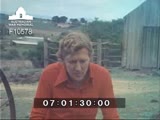
Neil Davis, as a cameraman and war correspondent, on the part fate plays in a war. He felt his obligation as a cameraman and correspondent was to bring truth to the people. The television coverage of the war left a lot to be desired however it did show for the first time the ugly reality the war. Davis' 11-year stay in Indo China substantiates his personal view of the war being the most significant event since the Second World War. Davis also made many close friendships there. Bradbury asks were there any elements of racism with the American troops. Davis answers that the Americans did not really understand the Vietnamese because had not been indoctrinated enough. They did not come in contact with the ordinary Vietnamese but rather the people who made money from the American presence. They did not really meet the ARVN because the Vietnamese fought their own war. American media coverage focused on the Americans, unlike Davis', which mainly covered the Vietnamese. The war in a broad sense was communism versus capitalism but also could be seen as an episode where people were emerging from feudalism and gaining their independence and freedom. Davis tried to stay neutral with his coverage despite his sympathies being with the Vietnamese people. Davis does not think that there was any way that the American could have won the war. The American bombing of the North brought the Communists to the conference table but he feels it made no real difference to the outcome. US employment of laser guided weapons that destroyed surface to air missile (SAM) sites and strategic bridges. The sophistication of the North's anti-aircraft system. Davis mentions the 'people sniffer' used by the Americans as an example of the sophisticated technology employed in the war and how this sometimes failed. Evasion tactics to avoid the radar guided SAM. Brief mention of helicopter losses in South Vietnam and the introduction of the shoulder mounted SAM (Soviet SA-7) by the North Vietnamese.
Details
Interviewer
David Bradbury
Physical Description
Base: acetate
Colour: colour (Eastman)
Film type: OPN
Format: 16mm
Sound: sound
Measurement
Duration
Footage
Projection speed
Conflicts
Places
Tags