Description
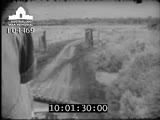
The tanks went to Vietnam in a cloud of public apprehension, but soon proved their worth. The Task Force Commander, Brigadier Pearson said before he left South Vietnam just recently that the Centurion tank had clearly been proven in operations in Vietnam. The tanks have increased the flexibility and mobility of the force, and are one of its most vital elements. The decision to deploy tanks to the war was announced by the late former Prime Minister, Mr Holt, in October 1967 - and it aroused considerable criticism. Critics said the fifty-two ton beasts would bog down in the steamy, soggy South East Asian country, that they would be restricted to base areas, and even if they could work outside, they would not be able to keep up with the infantry. The decision was firm, however, and four months later the tanks were trundling across the Asian countryside and the critics' arguments were put to rest. Mobility is restricted in the wet season, but for the tankies the tempo does not slacken, and operations continue. The ground pressure the tanks exert is twelve and a half pounds per square inch - about three pounds lighter than the pressure you exert on your lounge chair, and a great deal less than that exerted by a lady's spiked heel. This troop of tanks, working with a platoon of infantry and armoured personnel carriers, is on a short operation fifteen miles north of the Task Force base at Nui Dat, with the mission of ambushing Viet Cong moving across Route Two, as well as conducting reconnaissance-in-force. How they operate and move is typical of the tank force. In the four months that the present squadron, Bravo Squadron, of the First Armoured Regiment, has been in Vietnam the tanks have been used in every type of tactical situation - street fighting, jungle battles, infantry protection - and often simultaneously. The diversity of roles which the squadron fulfills means that it is seldom together. In fact, it has only been together in the base for six hours in four months, and even then it was by coincidence. The statistics being clocked up in Vietnam are formidable and impressive. More than twenty thousand rounds of ammunition and twenty thousand miles. And that's a lot of miles as a speed of no more than twenty-one miles per hour, its maximum. Using these figures for averages, four tanks have moved one mile every hour of the day since the squadron arrived. The petrol consumption is not worked out in miles per gallon, but gallons per mile. The tanks chew up four gallons to the mile, and the squadron uses just on five hundred gallons of high octane fuel per day. How has the enemy reacted to the tanks? In the words of Squadron Commander, Major Alex Smith of Grange, Brisbane, Qld, they have a healthy respect for them, particularly as they have nothing like them. As a comparision you could ask yourself whether you would rather face a herd of wild horses, if you could call the armoured personnel carriers such, or a herd of wild elephants. The tanks have given the infantry the ability to be a rolling, crushing force. Ninety per cent of the time the Viet Cong break contact in a fight when they hear the tanks coming. Before, they could escape through the rubber trees and thick jungle safe from the armoured personnel carriers, but trees are no obstacle to a tank. Because of their grudging respect for the tanks, the Viet Cong are taking pains to learn their measure. They now have a rocket-propelled grenade capable of penetrating armour, but it took them thirteen months, and it took about twelve months to determine the size of mine required to stop the tanks. Five tanks have so far been penetrated by the rocket propelled grenades, as they are called, and two badly damaged by anti-tank mines. However, of the estimated four hundred tankies who have now served in Vietnam, including members of the present squadron, only two have been killed, and about thirty wounded. This soldier was wounded when a tank set off an anti-personnel mine. He was hit by the shrapnel while sitting on top of the tank. Within minutes a "dust-off" helicopter is on the scene to take him to hospital for surgery. The Centurions are old - they've been in service since 1951. But despite their age, they are doing a job in Vietnam which has confounded their critics. The ultimate in praise comes from an infantryman when he says he's not happy when the tanks aren't around.
Details
Object Type
Actuality footage
Physical Description
Base: acetate
Colour: b&w
Film type: ORCP
Format: 16mm
Sound: sound and silent
Measurement
Duration: 0h 13' 55"
Footage: 500 ft
Projection speed: 24 fps
Date Made
18 August 1969-21 August 1969
Whole/Part
Intellectual record
Conflicts
Units
Tags